
Making almond cookies isn’t just about the ingredients, it’s about capturing that warm, toasted almond scent filling your kitchen and evoking memories of quiet afternoons or family gatherings. There’s something comforting about the way the aroma lingers, hinting at a subtle crunch and a tender crumb inside each bite. It’s a simple pleasure, but one that feels like a small, honest act of nostalgia.
I’ve tinkered with this recipe over years, trying to perfect that delicate balance of nutty depth and melt-in-your-mouth texture. Sometimes I over-toast the almonds and end up with a smoky punch; other times I skip the chilling step and the cookies spread too much, losing their shape. But when everything clicks, it’s a quiet moment of pride—knowing you’ve made something that’s both familiar and uniquely your own.
Focusing on how the subtle balance of toasted almond aroma and crumbly texture in these cookies evokes memories of family gatherings and quiet afternoons, making each batch a small act of nostalgia.
The story behind this recipe
- This recipe sprouted from a tiny kitchen experiment after a weekend of browsing vintage cookbooks. I was chasing that perfect balance—crisp edges with a tender, almost buttery crumb inside—and somehow, the toasted almond aroma became the heart of it all. Every batch takes me back to my grandmother’s old baking tin, where the smell of almonds mingled with vanilla, filling the whole house.
- Over the years, I’ve tweaked the process—adding a pinch of sea salt here, toasting almonds a little longer there—trying to capture that elusive, cozy magic. Sometimes I mess up with over-baking or under-sugaring, but the mistakes remind me that the best recipes are born from a little chaos. Each batch feels like a quiet victory, a small ritual I return to when I need comfort.
- heading: The story behind this recipe
Ingredient breakdown
- Almonds: I prefer toasted almonds for that deep, nutty aroma that really wakes up the cookie. Skip this step if you’re in a rush, but expect a milder flavor.
- Butter: I use unsalted, real butter—nothing beats that rich, creamy melt. If you’re dairy-free, try coconut oil, but the cookies will have a slightly different crumb and flavor.
- Sugar: I stick to superfine sugar for a smoother, less grainy sweetness. Brown sugar makes them a touch softer and adds a hint of caramel—try it if you like richer cookies.
- Flour: I use all-purpose flour, but if you want a more tender cookie, a splash of almond flour can boost the nutty flavor without overwhelming the texture.
- Egg: I prefer large eggs—they help bind everything nicely. If you’re out, a flaxseed substitute works, but the cookies might be a tad less rich and a little denser.
- Salt: Just a pinch to heighten the nuttiness. If you love a bit of crunch, sprinkle sea salt on top before baking—adds a lovely contrast.
- Vanilla: A splash of real vanilla extract elevates the flavor, making the almonds pop. Skip it if you want a more straightforward, nut-focused taste.
Spotlight on key ingredients
Almonds:
- I love toasted almonds for that deep, nutty aroma that really wakes up the cookie. Skip this step if you’re in a rush, but expect a milder flavor.
- They behave differently when toasted—become crunchy and release their oils, making the aroma more intense and inviting.
Butter:
- I prefer unsalted, real butter—nothing beats that rich, creamy melt. If you’re dairy-free, try coconut oil, but the cookies will have a slightly different crumb and flavor.
- It melts into the dough, giving a tender crumb and rich flavor. Be sure to soften it first for even mixing.
Notes for ingredient swaps
- Dairy-Free: Coconut oil or vegan butter can replace butter, but expect a slightly different crumb and a coconut aroma.
- Sugar: Honey or maple syrup can be used instead of superfine sugar, adding moisture and a subtle caramel note, but reduce liquid slightly.
- Flour: Almond flour can boost the nutty flavor and make cookies softer, but use less to prevent spreading too much.
- Egg: Flaxseed meal mixed with water works as a binder; cookies may be denser and less tender.
- Nuts: If almonds aren’t available, finely chopped hazelnuts or cashews offer a different roasty or buttery flavor.
- Salt: Sea salt flakes on top before baking add a pleasant contrast, but skip if you prefer a sweeter profile.
- Flavoring: A splash of almond extract instead of vanilla enhances the nutty aroma, especially if you love almond-forward flavors.
Equipment & Tools
- Mixing bowl: Combine ingredients thoroughly
- Wooden spoon or spatula: Mix and fold ingredients
- Baking sheet: Bake cookies evenly
- Parchment paper: Prevent sticking and make cleanup easier
- Cooling rack: Allow cookies to cool evenly and stay crisp
- Measuring cups/spoons: Ensure accurate ingredient portions
Step-by-step guide to almond cookies
- Equipment & Tools: Gather a mixing bowl, wooden spoon or spatula, baking sheet, parchment paper, cooling rack, and measuring cups/spoons. The bowl for mixing, the sheet for baking, parchment to prevent sticking, rack for cooling.
- Preheat your oven to 175°C (350°F). Line the baking sheet with parchment paper. Toast the almonds lightly in a dry skillet over medium heat, about 3-4 minutes until fragrant and golden. Let cool, then chop coarsely.
- In the mixing bowl, cream together 1/2 cup (115g) unsalted butter and 1/2 cup (100g) superfine sugar until pale and fluffy, about 2-3 minutes. This step is crucial for a tender crumb.
- Add 1 teaspoon vanilla extract and 1 egg (large) to the butter mixture. Mix until well combined. If the mixture looks slightly curdled, don’t worry—it will come together with the dry ingredients.
- In a separate bowl, whisk together 1 1/4 cups (150g) all-purpose flour, 1/4 teaspoon baking powder, and a pinch of salt. Gradually add this to the wet ingredients, stirring gently until just combined. Overmixing can make the cookies tough.
- Fold in the toasted almonds, distributing evenly. The dough will be soft but manageable. If it feels too sticky, refrigerate for 15 minutes to firm up.
- Using a teaspoon or cookie scoop, portion out the dough onto the prepared baking sheet, spacing about 2 inches apart. Slightly flatten each cookie with the back of a fork or your fingers.
- Bake for 12-14 minutes. The edges should turn a light golden brown. Keep an eye on the first batch; oven temps can vary. The smell will be warm and nutty, hinting at done-ness.
- Once baked, let the cookies rest on the sheet for 5 minutes. Then transfer carefully to a cooling rack. They firm up as they cool, developing their signature crumb.
- Finish with a light sprinkle of sea salt or a drizzle of honey if desired. Serve warm or at room temperature. Store in an airtight container for up to 3 days, or freeze for longer storage.
Let the cookies cool completely on a rack before storing. Finish with a sprinkle of sea salt or a drizzle of honey if desired. Serve warm or at room temperature, enjoying the aroma of toasted almonds and vanilla.
How to Know It’s Done
- Edges are golden and firm, with a slight crackle when touched.
- The aroma is toasted almonds with a hint of vanilla.
- Cookies feel set but still slightly soft in the center when gently pressed.
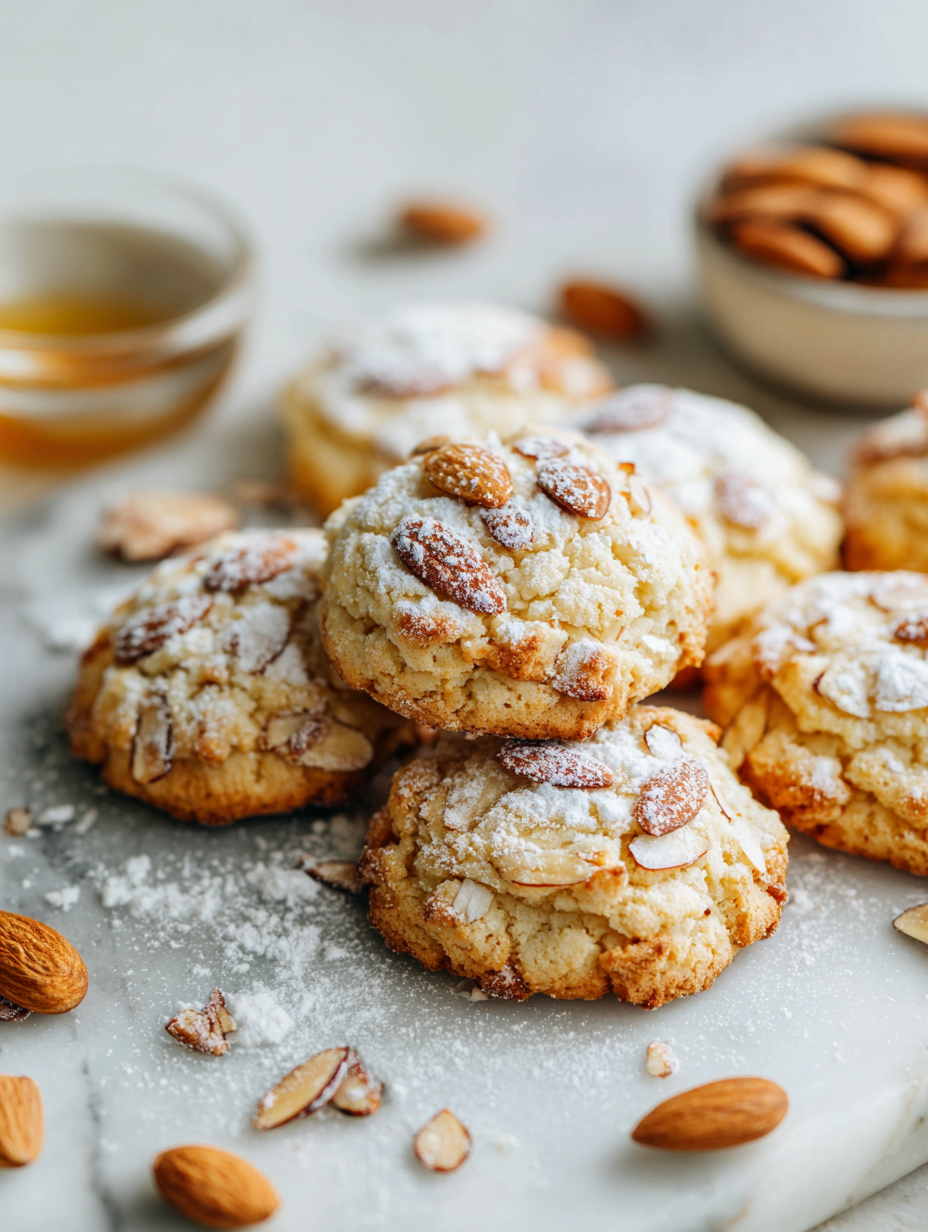
Almond Cookies
Ingredients
Equipment
Method
- Gather all your tools: mixing bowl, wooden spoon or spatula, baking sheet, parchment paper, and measuring cups. Preheat your oven to 175°C (350°F) and line the baking sheet with parchment paper. Toast the almonds in a dry skillet over medium heat for about 3-4 minutes until fragrant and golden, then let them cool before chopping coarsely.
- In the mixing bowl, combine the softened butter and superfine sugar. Cream them together with a wooden spoon or spatula for about 2-3 minutes until the mixture is pale, fluffy, and slightly creamy, filling the air with a warm, nutty aroma.
- Add the vanilla extract and the large egg to the butter mixture. Mix thoroughly until everything is well incorporated, and the mixture feels smooth and cohesive.
- In a separate bowl, whisk together the all-purpose flour, baking powder, and a pinch of salt. Gradually add these dry ingredients to the wet mixture, stirring gently to combine—be careful not to overmix, as this can toughen the cookies.
- Fold in the toasted almonds, distributing them evenly throughout the dough. The dough will be soft but manageable; if it feels sticky, refrigerate it for about 15 minutes to firm up, making it easier to shape.
- Using a teaspoon or small cookie scoop, portion out the dough onto the prepared baking sheet, spacing each portion about 2 inches apart. Slightly flatten each ball of dough with the back of a fork or your fingers to encourage even spreading and a slightly crunchy edge.
- Bake the cookies in the preheated oven for 12-14 minutes. The edges should turn a light golden brown, and the aroma of toasted almonds will fill your kitchen. Keep an eye on them, as oven times can vary slightly.
- Once baked, allow the cookies to rest on the baking sheet for about 5 minutes—they will continue to set and develop their crumbly texture. Then, transfer them carefully to a cooling rack and let them cool completely.
- Finish with a light sprinkle of sea salt or a drizzle of honey if you like, to enhance the nutty flavor. Serve the cookies warm or at room temperature, enjoying their fragrant aroma and tender crumb.
Tips for perfect almond cookies
- Bolded mini-head: Toast almonds until fragrant and golden—this deepens flavor and amplifies aroma.
- Bolded mini-head: Keep butter just softened—not melted—to ensure even mixing and tender cookies.
- Bolded mini-head: Chill dough for 15 minutes if it feels sticky—this helps prevent spreading during baking.
- Bolded mini-head: Slightly flatten cookies before baking—this promotes even spreading and a crunchy edge.
- Bolded mini-head: Monitor edges closely around 12 minutes—look for a light golden color as an doneness cue.
- Bolded mini-head: Use parchment paper to prevent sticking and make cleanup smoother, especially with delicate dough.
- Bolded mini-head: Finish with a sprinkle of sea salt or a drizzle of honey—adds contrast and enhances nutty flavor.
Common almond cookie mistakes and solutions
- FORGOT to adjust oven temperature → ensure cookies don’t over-brown by checking at 12 minutes.
- DUMPED in too much flour → add gradually, stopping when dough is manageable but not sticky.
- OVER-TORCHED almonds → toast almonds until fragrant, but remove once they turn golden, not dark.
- MISSED resting time → refrigerate dough for at least 15 minutes to prevent spreading.
Quick fixes and pantry swaps
- If cookies spread too much, chill dough for 15 minutes before baking.
- When almonds are too bland, toast longer for richer aroma and crunch.
- Splash a few drops of vanilla if the nut flavor feels muted after baking.
- Patch over cracked cookies with a quick dusting of powdered sugar for presentation.
- Shield delicate cookies from drafts in the oven to prevent uneven baking.
Prep, store, and reheat tips
- Cookie dough can be prepared a day in advance; wrap tightly and refrigerate for up to 24 hours. The aroma of almonds develops overnight, making baked cookies even more fragrant.
- Baked cookies stay crisp and fresh in an airtight container at room temperature for up to 3 days. They soften slightly but retain their nutty aroma and crumbly texture.
- For longer storage, freeze cookies in a sealed container for up to 1 month. To reheat, warm in a low oven (about 150°C/300°F) for 5–7 minutes until fragrant and slightly crispy.
- Refrigerated or frozen cookies may lose some of their initial crunch but will still deliver that toasted almond scent and tender crumb when warmed.
Top questions about almond cookies
1. How do I know when almond cookies are done baking?
Look for a slightly golden edge and a firm, crackly top. The aroma should be warm and nutty, and the cookies should feel set but still soft inside when pressed gently.
2. Can I use raw almonds instead of toasted ones?
Use fresh, toasted almonds for a richer flavor and crunch. If you only have raw almonds, toast them until fragrant and golden before chopping.
3. Can I make these cookies dairy-free?
Yes, you can substitute coconut oil for butter, but expect a slightly softer cookie with a coconut aroma. It’s a good dairy-free option that still delivers a nutty flavor.
4. What if my dough is too sticky to handle?
Chill the dough for at least 15 minutes if it feels too sticky. This helps prevent spreading and makes shaping easier, especially if your kitchen is warm.
5. How long should I bake the cookies?
Bake at 175°C (350°F) for 12–14 minutes. Keep an eye on the edges—they should turn a light golden brown and smell toasted. The cookies will firm up as they cool.
6. How should I store almond cookies?
Store baked cookies in an airtight container at room temperature for up to 3 days. For longer storage, freeze up to a month and reheat briefly in a low oven before serving.
7. My cookies spread too much, what can I do?
If cookies spread too much, chill the dough for 15 minutes before baking. For uneven baking, rotate the tray halfway through the baking time.
8. Can I use regular sugar instead of superfine?
Use superfine sugar for a smooth, melt-in-your-mouth texture. Brown sugar adds moisture and a caramel note, making cookies softer and richer.
9. How should I toast the almonds?
Toast the almonds until fragrant and golden, about 3–4 minutes over medium heat. This deepens the flavor and releases their oils for a more intense aroma.
10. Can I add other flavorings or toppings?
Add a pinch of sea salt or a drizzle of honey after baking to enhance the nutty flavor and add a pleasant contrast to the sweetness.
These almond cookies are more than just a treat—they’re a small reminder of how simple ingredients can evoke powerful memories. Baking them feels like a quiet act of care, filling your kitchen with warm, toasted almond scent that lingers long after the last bite.
Whenever I make a batch, I think about family gatherings and lazy afternoons. They’re imperfect, a little crumbly and beautifully nutty, but there’s a kind of honest joy in that. Sometimes, it’s the small, homemade moments that stick the longest.