
Shortbread cookies are my go-to when I need something simple yet special. There’s a quiet charm in their buttery richness, and infusing unexpected herbs like rosemary or lavender turns them into a fragrant surprise. It’s funny how they can be both utterly humble and surprisingly complex, just by tweaking a few ingredients. I love how they come together quickly, but still feel like a little luxury in my hand.
Baking these treats feels like a small act of rebellion—breaking free from overly sweet or complicated desserts. I’ve found that the best batches are made with love and a touch of curiosity. When I add a pinch of dried lavender, the aroma alone makes the whole kitchen smell like a quiet garden, and suddenly, these cookies become something memorable, not just a snack.
Focusing on how the simplicity of shortbread cookies can be elevated by infusing unexpected flavors like rosemary or lavender, turning a humble treat into a fragrant, aromatic experience.
Shortbread’s Quiet Charm
- I remember the first time I baked shortbread with my grandmother. The scent of melting butter and toasted flour filling the air, it felt like a warm hug from the past. That simple, buttery dough always felt like a blank canvas—ready to be personalized with a sprinkle of sea salt or a dash of vanilla, depending on the day’s mood.
- Over the years, I’ve tinkered with it—adding herbs, citrus zest, even a hint of spice. But sometimes, the simplest approach is the best. There’s something grounding about a cookie that’s just butter, sugar, and flour, especially when the ingredients are top-notch and the process is straightforward. It’s a quiet reminder that humble recipes often carry the most heart.
- heading: Shortbread’s Quiet Charm
Key Ingredients Breakdown
- Unsalted butter: I always use high-quality, European-style butter for that rich, melt-in-your-mouth texture. Skip the salt if you prefer a milder flavor, or add a tiny pinch for depth.
- Granulated sugar: I find superfine sugar dissolves more evenly, giving the cookies a smoother crumb. If you only have regular sugar, just mix it a little longer into the butter.
- All-purpose flour: Sifting the flour helps prevent lumps and keeps the dough tender. For a slightly nuttier flavor, I sometimes substitute part of it with finely ground almond flour.
- Salt: A pinch enhances the buttery richness and balances the sweetness. Sea salt flakes sprinkled on top before baking add a lovely crunch and sparkle.
- Herbs or flavorings (optional): Fresh rosemary or lavender can turn these simple cookies into something fragrant. Use sparingly—overpowering the buttery base is easy if you’re heavy-handed.
- Vanilla extract: A splash of good vanilla adds warmth and depth. If you’re out, a tiny bit of almond extract can give a different but lovely aroma.
- Egg (optional): I usually skip eggs for classic shortbread, but a small egg yolk can make the dough slightly softer if you prefer a more tender bite.
Spotlight on key ingredients
Unsalted butter:
- I always use high-quality, European-style butter for that rich, melt-in-your-mouth texture. Skip the salt if you prefer a milder flavor, or add a tiny pinch for depth.
- Granulated sugar: I find superfine sugar dissolves more evenly, giving the cookies a smoother crumb. If you only have regular sugar, just mix it a little longer into the butter.
- All-purpose flour: Sifting the flour helps prevent lumps and keeps the dough tender. For a slightly nuttier flavor, I sometimes substitute part of it with finely ground almond flour.
Vanilla extract:
- Salt: A pinch enhances the buttery richness and balances the sweetness. Sea salt flakes sprinkled on top before baking add a lovely crunch and sparkle.
- A splash of good vanilla adds warmth and depth. If you’re out, a tiny bit of almond extract can give a different but lovely aroma.
- Herbs or flavorings (optional): Fresh rosemary or lavender can turn these simple cookies into something fragrant. Use sparingly—overpowering the buttery base is easy if you’re heavy-handed.
Notes for ingredient swaps
- Dairy-Free: Swap butter for coconut oil or vegan butter. Expect a slightly different richness and a softer texture.
- Gluten-Free: Use a blend of almond flour and rice flour. Cookies may be more delicate and crumbly, but still tasty.
- Sweetener Variations: Replace sugar with honey or maple syrup—use half the amount, and expect a chewier cookie with a hint of caramel.
- Salt: Omit or reduce salt if you prefer a less savory note. A pinch of sea salt on top before baking enhances flavor.
- Herb & Flavor Additions: Use lemon zest or matcha powder instead of herbs. Brighten or add earthy tones, but don’t overdo it.
- Vanilla Substitutes: Almond extract or citrus oils can add aroma—use sparingly, as they are potent.
- Eggs: For a richer dough, add a small beaten egg or egg yolk; for a tender crumb, skip eggs altogether.
Equipment & Tools
- Mixing bowl: Combine butter and sugar evenly.
- Rolling pin: Flatten the dough to even thickness.
- Baking sheet: Hold the cookies during baking.
- Parchment paper: Prevent sticking and make cleanup easier.
- Sharp knife or cookie cutter: Shape the cookies into desired forms.
Step-by-step guide to shortbread
- Equipment & Tools: Gather a mixing bowl, rolling pin, baking sheet, parchment paper, and a sharp knife or cookie cutter. The bowl for mixing, rolling pin for shaping, sheet for baking, parchment for non-stick surface, knife/cutter for shaping.
- Cream butter and sugar: Soften 1 cup (226g) of unsalted butter at room temp, then mix with 1/2 cup (100g) sugar until pale and fluffy, about 3-4 minutes. The mixture should look smooth and slightly glossy.
- Add flavor: Mix in 1 teaspoon vanilla extract or your chosen herb-infused oil. Smell for a fragrant, sweet aroma—this is your scent of comfort.
- Incorporate flour: Gradually add 2 cups (240g) all-purpose flour, mixing on low speed or folding until just combined. The dough should come together but not be sticky. If it’s too crumbly, add a teaspoon of cold water.
- Chill the dough: Turn out onto a floured surface, shape into a disk, wrap in plastic, and refrigerate for 30 minutes. This firms it up for easy rolling and prevents spreading.
- Roll out: Lightly flour your surface and rolling pin. Roll the dough to about 1/4 inch (6mm) thickness, aiming for evenness. If sticky, dust lightly with flour but avoid overdoing it.
- Cut shapes: Use a cookie cutter or knife to cut into rounds, squares, or your preferred shapes. Place on the prepared baking sheet, spacing about 1 inch apart. Chill again for 10 minutes if the dough feels soft.
- Bake: Preheat oven to 160°C (320°F). Bake cookies on the middle rack for 15–18 minutes until edges are just golden. They should smell buttery and slightly toasted around the edges.
- Cool: Let cookies rest on the baking sheet for 5 minutes, then transfer to a wire rack to cool completely. They firm up as they cool, developing a delicate, melt-in-your-mouth texture.
Chill the dough before baking, let cookies cool on a wire rack, then serve or store in an airtight container. For crispier cookies, bake a minute longer; for softer, remove earlier.
How to Know It’s Done
- Cookies turn a light golden around the edges, indicating doneness.
- The aroma is rich and buttery, with a hint of toasted flour.
- Cookies are firm but not hard, with a slight jiggle in the center when gently shaken.
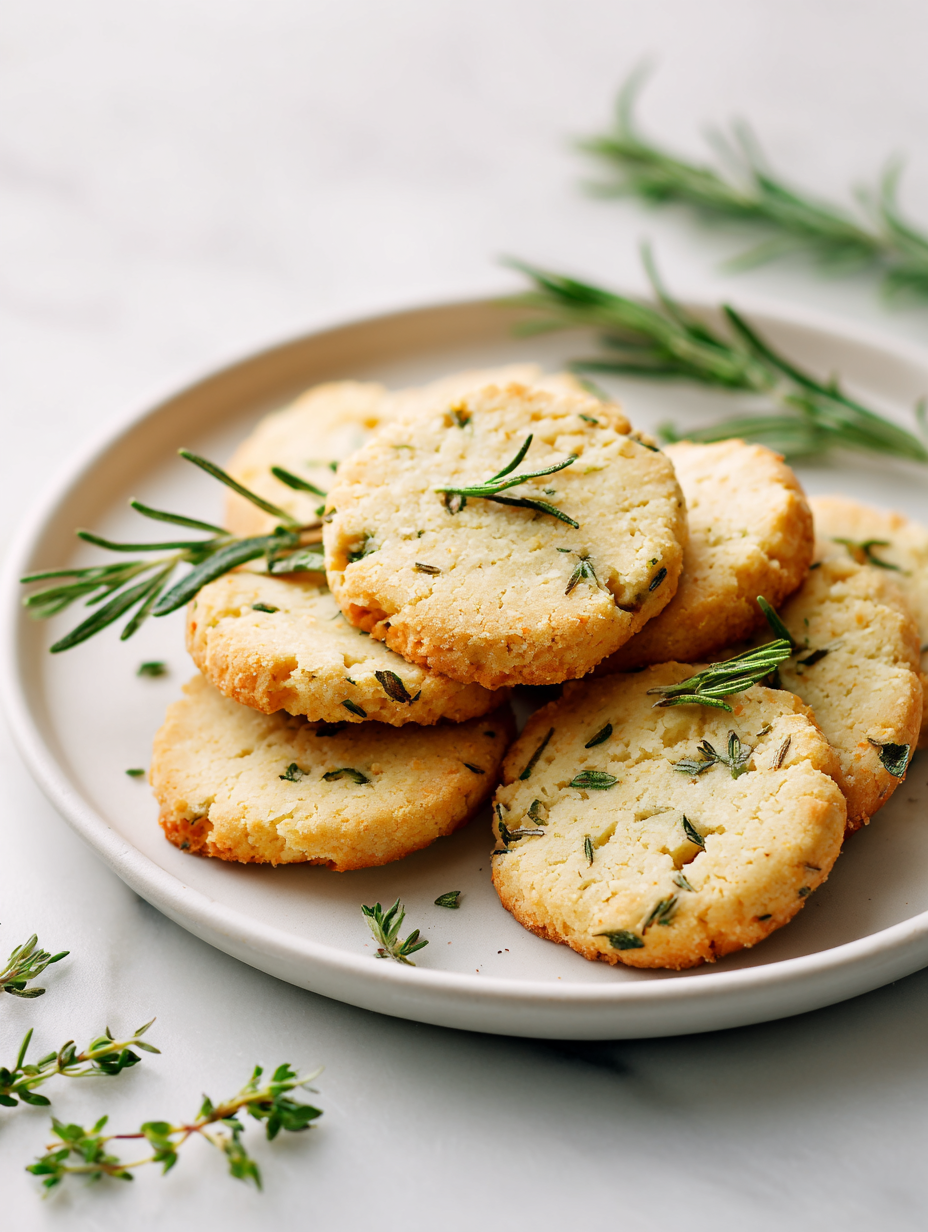
Herb-Infused Shortbread Cookies
Ingredients
Equipment
Method
- Begin by softening the butter at room temperature until it feels silky when pressed, then place it in a mixing bowl.
- Add the superfine sugar to the butter and beat with a spatula or hand mixer until the mixture becomes pale, fluffy, and fragrant—about 3-4 minutes. You should see a slight glossiness and it should lighten in color.
- Mix in the vanilla extract and your finely chopped herbs, allowing the aromatic oils to infuse into the butter mixture. The scent will become wonderfully fragrant.
- Sift the all-purpose flour into the bowl to prevent lumps, then gradually fold it into the wet mixture using a spatula or your hands, just until the dough begins to come together. Avoid overmixing to keep the cookies tender.
- Gather the dough into a ball, then flatten it into a disk, wrap with plastic wrap, and chill in the refrigerator for about 30 minutes. This relaxes the dough and makes it easier to roll out.
- Preheat your oven to 160°C (320°F). Lightly flour a clean surface and your rolling pin, then roll out the chilled dough to about 1/4 inch (6mm) thickness, aiming for an even layer.
- Use a cookie cutter or a sharp knife to cut the dough into your desired shapes—rounds, squares, or rectangles. Place the cut cookies on a parchment-lined baking sheet, spacing them about 1 inch apart.
- Sprinkle a pinch of sea salt flakes over each cookie for added flavor and a touch of crunch. Then, place the baking sheet in the oven.
- Bake for 15–18 minutes, or until the edges are just golden and the cookies emit a rich, buttery aroma. Keep a close eye near the end to prevent overbrowning.
- Remove the cookies from the oven and allow them to cool on the baking sheet for 5 minutes before transferring to a wire rack. They will firm up as they cool, revealing their delicate, melt-in-your-mouth texture.
- Once cooled completely, enjoy these fragrant shortbread cookies with a cup of tea or pack them into a box as a lovely homemade gift.
Notes
Pro Tips for Perfect Shortbread
- Chill dough thoroughly → Prevents spreading and keeps cookies tender.
- Use cold butter → Creates flaky, melt-in-your-mouth shortbread.
- Score before baking → Easy to break into perfect pieces once cooled.
- Bake until just golden → Keeps cookies crisp without overbaking and burning edges.
- Handle dough minimally → Keeps it tender and avoids tough cookies.
- Use parchment paper → Ensures easy removal and clean baking sheet.
- Cool completely before storing → Maintains crisp texture and prevents sogginess.
Common Shortbread Mistakes & Fixes
- FORGOT to chill dough → Chill for at least 30 minutes before rolling.
- DUMPED too much flour → Use just enough to prevent sticking, avoid over-flouring.
- OVER-TORCHED cookies → Bake at lower temp, check color early, and remove when light golden.
- MISSED resting time → Allow dough to rest after shaping for better texture and handling.
Quick Fixes & Pantry Swaps
- If cookies spread too much, chill dough for 15 minutes before baking.
- When dough feels crumbly, add a tiny splash of cold water to bring it together.
- Splash with a little milk or cream if cookies turn out too dry or crumbly.
- Patch burnt edges by gently scraping or trimming; re-bake for a minute for crispness.
- Shield cookies from over-browning by covering edges with foil if they brown too quickly.
Prep, store, and reheat tips
- Dough can be made ahead: Wrap it tightly in plastic and refrigerate for up to 3 days, which allows flavors to meld and makes rolling easier later.
- Freeze shaped cookies: Once cut, arrange on a baking sheet and freeze until firm, then transfer to an airtight container. They keep for up to 2 months and can be baked directly from frozen—just add a minute or two to baking time.
- Shelf life: Store baked cookies in an airtight container at room temperature for up to a week; for longer storage, freeze. They develop a slightly richer, buttery aroma after a day or two.
- Reheating: Warm cookies gently in a low oven (around 150°C/300°F) for 5-7 minutes until just warmed and fragrant. They will crisp up again, bringing out that fresh-baked scent.
Top questions about shortbread cookies
1. Should I use softened or cold butter?
Use cold butter straight from the fridge for the best texture and flaky layers.
2. Why do I need to chill the dough?
Chilling the dough for at least 30 minutes helps prevent spreading and makes rolling easier.
3. How do I know when the cookies are done?
Bake until edges are just golden; overbaking makes cookies too hard and dry.
4. Can I use regular sugar instead of superfine?
Using superfine sugar dissolves more evenly, giving a smoother crumb and less graininess.
5. Should I sprinkle salt on top?
Add a pinch of sea salt flakes on top before baking for a delightful crunch and sparkle.
6. Can I add herbs or spices to shortbread?
For a herb-infused twist, try adding rosemary or lavender to the dough for fragrant, unexpected flavor.
7. How should I store shortbread cookies?
Store baked cookies in an airtight container at room temperature for up to a week; freeze for longer.
8. Can I prepare the dough ahead of time?
Shape the dough into a disk, wrap tightly, and refrigerate or freeze for advance prep.
9. What if my cookies spread too much?
If cookies spread too much, chill the cut shapes on the baking sheet for 10 minutes before baking.
10. How do I reheat shortbread without making it soggy?
Reheat in a low oven (around 150°C or 300°F) for 5-7 minutes to refresh their crispness and aroma.
Baking these shortbread cookies is a simple pleasure that always feels like a quiet act of kindness. Their buttery aroma and tender crumb can turn any day around, especially when infused with unexpected herbs or citrus zest. It’s a humble recipe, but one that reminds me how small, honest treats can carry so much warmth.
In the end, it’s about the process—measuring carefully, handling the dough gently, and savoring that first crispy, melt-in-your-mouth bite. These cookies are a little ritual I keep coming back to, especially during quiet mornings or cozy afternoons. A straightforward reminder that sometimes, less really is more.