
There’s something about the smell of toasted coconut that immediately transports me somewhere tropical, even if I’m just in my own kitchen in winter. When those flakes hit the hot pan, they crackle and turn a golden brown, releasing a sweet, nutty aroma that fills the air and makes everyone stop what they’re doing. Baking these cookies feels like a tiny vacation, a break from the usual routine, and a way to bring a little sunshine inside.
What I love most is how this recipe captures that warm, cozy feeling of coconut without overwhelming sweetness. The toasted flavor deepens as the cookies bake, giving each bite a complex, smoky richness that’s hard to describe but impossible to resist. It’s a simple treat, but one that somehow feels luxurious—like a small escape wrapped in a cookie.
Focusing on how the aroma of toasted coconut transforms the baking experience, making the kitchen smell like a tropical retreat even in the middle of winter.
The story behind this recipe
- This recipe was born out of a lazy Sunday afternoon when I found a bag of toasted coconut lingering in my pantry. I started mixing ingredients just to see what would happen, not expecting much. Turns out, the toasted coconut’s smoky aroma really takes these cookies somewhere special, even if it’s just my own kitchen.
- The first batch I made was for a small gathering, and everyone kept asking about that irresistible smell. It’s funny how a simple ingredient like toasted coconut can turn a humble cookie into something memorable. Now, I always keep a jar of toasted coconut around, just in case I need a quick treat that feels like a little tropical getaway.
- heading: The story behind this recipe
Ingredient breakdown
- Coconut flakes: I love using toasted coconut for that deep, smoky aroma that really boosts the flavor—swap with untoasted if you want a milder, more delicate coconut scent.
- Butter: I prefer unsalted for control over saltiness, but if all you have is salted, cut back slightly on added salt. The richness adds a creamy backdrop to the coconut’s crispiness.
- Sugar: Brown sugar makes these cookies extra tender and adds caramel notes—if you prefer a lighter, crisper cookie, use more granulated sugar instead.
- Eggs: I find room temperature eggs blend better and give the cookies a bit more lift—cold eggs can make your dough less cohesive, so quick warm-up can help.
- Vanilla extract: Just a splash brightens everything—if you’re out, a tiny pinch of almond extract can add a lovely nutty dimension, but don’t overdo it.
- Flour: I stick with all-purpose, but if you want a chewier cookie, a small splash of cornstarch can make them softer—avoid overmixing to keep them tender.
- Salt: A pinch balances the sweetness—if your coconut flakes are salty or toasted, you might want to omit additional salt for harmony.
Spotlight on key ingredients
Coconut flakes:
- I love using toasted coconut for that deep, smoky aroma that really boosts the flavor—swap with untoasted if you want a milder, more delicate coconut scent.
- Butter: I prefer unsalted for control over saltiness, but if all you have is salted, cut back slightly on added salt. The richness adds a creamy backdrop to the coconut’s crispiness.
- Sugar: Brown sugar makes these cookies extra tender and adds caramel notes—if you prefer a lighter, crisper cookie, use more granulated sugar instead.
Butter:
- I prefer unsalted for control over saltiness, but if all you have is salted, cut back slightly on added salt. The richness adds a creamy backdrop to the coconut’s crispiness.
- Vanilla extract: Just a splash brightens everything—if you’re out, a tiny pinch of almond extract can add a lovely nutty dimension, but don’t overdo it.
Notes for ingredient swaps
- Coconut Flakes: I prefer toasted for that smoky aroma—use untoasted for a lighter, milder coconut scent.
- Butter: Unsalted is best for control, but salted works—just cut back on added salt slightly.
- Sugar: Brown sugar adds moisture and caramel depth—swap with more granulated for crisper cookies.
- Eggs: Room temperature eggs blend better and lift the dough—cold eggs can make the dough less cohesive.
- Vanilla Extract: A splash brightens; if out, a pinch of almond extract adds a nutty note, but don’t overdo it.
- Flour: All-purpose is standard; for chewier cookies, add a teaspoon of cornstarch—avoid overmixing for tenderness.
- Salt: Just a pinch balances sweetness—omit if your coconut flakes are salty or toasted for harmony.
Equipment & Tools
- Oven: Bake the cookies evenly at the right temperature.
- Parchment paper: Prevent sticking and make cleanup easier.
- Mixing bowl: Combine ingredients thoroughly.
- Spatula: Mix and scoop dough.
- Baking sheet: Hold the cookies during baking.
Step-by-step guide to coconut cookies
- Preheat your oven to 180°C (350°F). Line a baking sheet with parchment paper. Gather a mixing bowl, a spatula, and a baking sheet.
- In a large bowl, combine 1 cup (120g) of toasted coconut flakes, 1/2 cup (100g) of granulated sugar, and 1/4 teaspoon of salt. Mix well to evenly distribute.
- Add 1/2 cup (115g) of softened unsalted butter to the dry mix. Use a spatula to incorporate until the mixture resembles coarse crumbs and is slightly sticky, about 2-3 minutes.
- Crack in 1 large egg and add 1 teaspoon of vanilla extract. Stir until the dough comes together and is cohesive. If too dry, add a teaspoon of milk.
- Scoop heaping tablespoons of dough onto the prepared baking sheet, spacing them about 2 inches apart. Flatten slightly with the back of a spoon or your fingers.
- Bake in the preheated oven for 10-12 minutes. The edges should turn golden brown, and the coconut will smell deeply toasted. Watch carefully to prevent burning.
- Remove from oven and let the cookies rest on the baking sheet for 5 minutes. Then transfer to a wire rack to cool completely, about 10 minutes.
- For best texture, allow the cookies to cool fully before stacking or storing. They should be crispy on the edges with a chewy center.
Let the cookies cool completely on a wire rack. Serve with a cup of tea or enjoy plain to savor the toasted coconut flavor. Store in an airtight container at room temperature for up to 3 days, or freeze for longer storage.
How to Know It’s Done
- Edges are golden brown and fragrant with toasted coconut aroma.
- Cookies feel firm but still slightly soft in the center when gently pressed.
- Coconut flakes on top are slightly cracked and crispy.
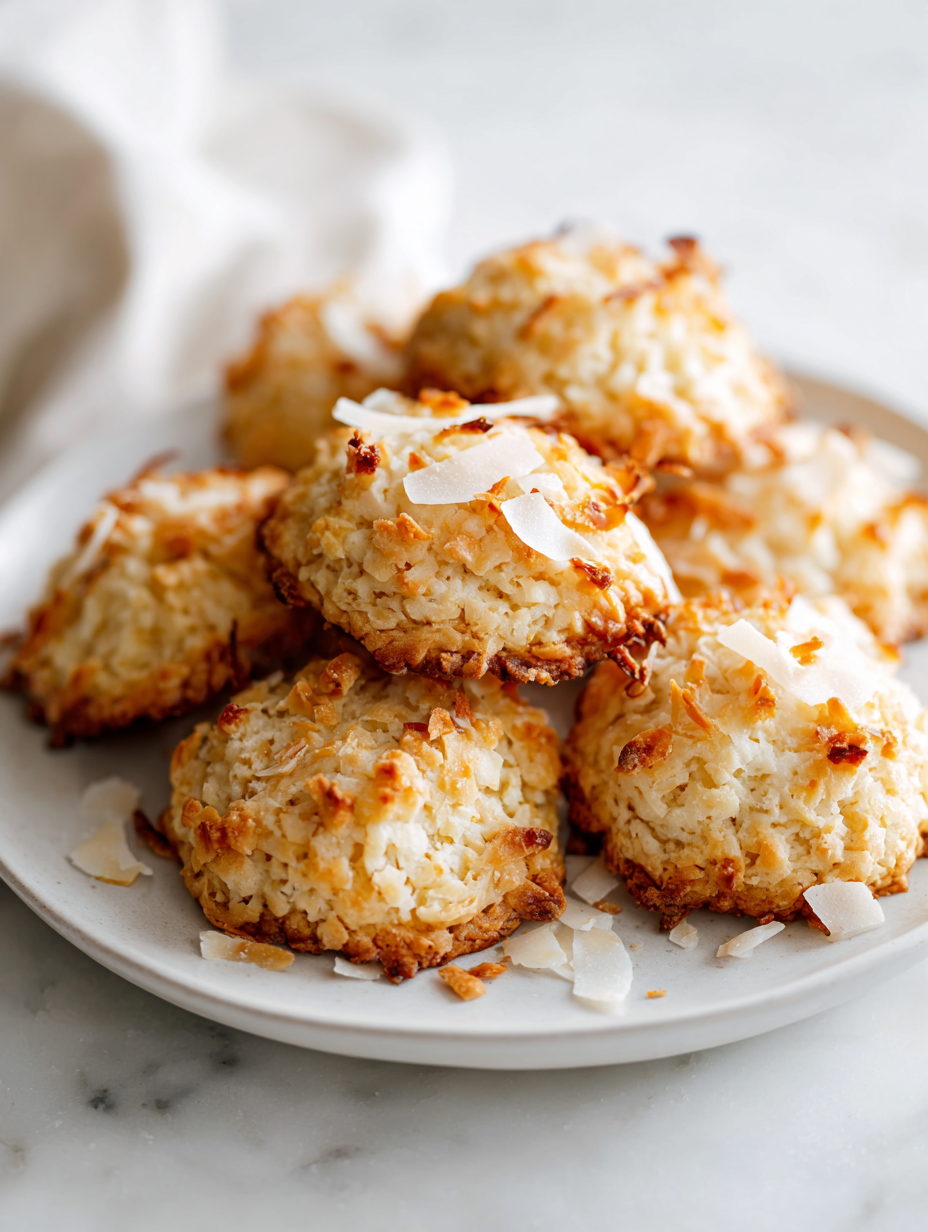
Toasted Coconut Cookies
Ingredients
Equipment
Method
- Preheat your oven to 180°C (350°F) and line a baking sheet with parchment paper to prevent sticking.
- In a large mixing bowl, combine the toasted coconut flakes, granulated sugar, and salt. Stir until evenly mixed, and the coconut is fragrant and golden in color.
- Add the softened butter to the dry mixture. Use a spatula to cut in the butter until the mixture resembles coarse crumbs and starts to stick together.
- Crack in the large egg and add the vanilla extract. Stir thoroughly until the dough becomes cohesive, soft, and slightly sticky. If the dough feels too dry, add a teaspoon of milk to help it come together.
- Scoop heaping tablespoon portions of dough onto the prepared baking sheet, spacing them about 2 inches apart. Gently flatten each portion with the back of a spoon or your fingers to encourage even spreading.
- Bake in the preheated oven for 10-12 minutes, watching closely. The edges should turn a beautiful golden brown and fill your kitchen with a toasted coconut aroma. Remove the cookies once they look crisp around the edges.
- Let the cookies rest on the baking sheet for about 5 minutes to firm up, then transfer them to a wire rack to cool completely for about 10 minutes. This helps develop their crisp texture and enhances flavor.
- Once cooled, enjoy these cookies plain or with a cup of tea. Store leftovers in an airtight container at room temperature for up to 3 days to keep them crispy and fragrant.
Notes
Pro tips for perfect coconut cookies
- Bolded: Toast coconut flakes until golden and fragrant—this deepens flavor and adds a smoky note.
- Bolded: Chill the dough for at least 30 minutes—this helps prevent spreading and enhances flavor development.
- Bolded: Use a light hand when flattening cookies—thin enough for crisp edges, but not so much they lose their chew.
- Bolded: Keep an eye on the oven during the last few minutes—coconut can burn quickly once it turns golden.
- Bolded: For extra crunch, bake cookies an extra minute—listen for a slight crackle and check for even color.
- Bolded: Store cookies in an airtight container with a slice of bread—this keeps them moist and fresh longer.
- Bolded: Reheat cookies briefly in the oven at 150°C (300°F) for 3-5 minutes—restorative warmth and aroma.
Common mistakes and how to fix them
- FORGOT to watch oven temperature → set a timer and check for golden edges.
- DUMPED too much sugar → reduce sugar if cookies spread too much or become overly sweet.
- OVER-TORCHED coconut → lower oven heat slightly or remove earlier to prevent burnt flavor.
- MISSED resting time → ensure cookies cool fully for optimal texture and flavor.
Quick fixes and pantry swaps
- If cookies spread too much → chill dough for 30 minutes before baking.
- When coconut burns → lower oven temperature slightly and remove early.
- Splash a few drops of water on hot coconut → create steam and shimmer.
- Patch a cracked cookie surface → press gently and bake a minute longer.
- Shield edges with foil → prevent over-browning during last few minutes.
Prep, store, and reheat tips
- Prep the dough up to a day in advance; keep it wrapped in plastic in the fridge for a fresh, rested flavor.
- Cookies can be stored in an airtight container at room temperature for 3 days, staying crisp and fragrant with toasted coconut aroma.
- For longer storage, freeze baked cookies for up to 1 month; reheat in a 150°C (300°F) oven for 3-5 minutes until warm and crispy.
- Refrigerated or frozen cookies may lose some of their initial crunch but rewarming restores aroma and texture beautifully.
- Allow cookies to reach room temperature before serving for optimal flavor and texture, especially if they’ve been chilled or frozen.
Top questions about coconut cookies
1. Can I use untoasted coconut flakes?
Use toasted coconut flakes for that smoky, caramelized flavor and aroma. Untoasted is milder, but still tasty.
2. Should I toast the coconut flakes myself?
Yes, but you’ll get a softer, less toasted flavor. Toast them in a dry skillet first for best results.
3. Why is my dough sticky or spreading too much?
Chill the dough for at least 30 minutes; it firms up and reduces spreading during baking.
4. How do I know when the cookies are done?
Bake at 180°C (350°F) until edges are golden brown and fragrant—usually 10-12 minutes.
5. How long do coconut cookies stay fresh?
Store cookies in an airtight container at room temperature for up to 3 days to keep them crisp.
6. How can I make the cookies chewier?
For a chewier texture, add a teaspoon of cornstarch or slightly underbake for a softer center.
7. How do I reheat coconut cookies?
Reheat cookies briefly in a 150°C (300°F) oven for 3-5 minutes to restore warmth and aroma.
8. Can I make these cookies dairy-free?
Use dairy-free margarine or coconut oil instead of butter for a dairy-free version.
9. Can I replace sugar with syrup?
Substitute honey or maple syrup for sugar if you want a different sweetness note, but it may change texture.
10. Can I use a different flavor extract?
Add a pinch of almond extract instead of vanilla for a nutty twist, but keep it subtle.
Baking these coconut cookies fills my kitchen with a warm, toasted coconut smell that instantly transports me to a tropical place, even in the middle of winter. Each bite delivers a satisfying crunch with a chewy center, and the smoky aroma lingers long after the last crumb is gone. It’s one of those simple pleasures that reminds me why I fell in love with baking in the first place.
Whenever I make these, I’m reminded that good ingredients and a little patience can turn a humble cookie into something special. Plus, they’re perfect for sharing—or keeping all to myself when I need a quick moment of comfort. They’re a reminder that sometimes, the simplest flavors are the most memorable.